
Workstations and meeting rooms
Office desks, chairs, meeting tables, pedestals, screens, freestanding cupboards, whiteboards and other reusable office furniture.
Business closures, downsizing & lease-end handovers
Clear an office properly when a business closes, relocates or reduces its footprint — with optional agreed removal of non-structural fittings and floor coverings.
A full office clearance is different from moving an active business into new premises. Sometimes everything must go: desks and cupboards, reception furniture, redundant equipment and the contents of meeting rooms, stores and staff areas. We can arrange clearance projects for businesses closing sites, organisations downsizing, managing agents and tenants preparing for a lease-end handover.
Ravenhill Removals handles the logistics of moving suitable business contents, while our specialist clearance business, Ravenhill Clearance Services Ltd, can support agreed commercial clearance and waste arrangements. Where building works are also required, these must be separately surveyed, specified and quoted.
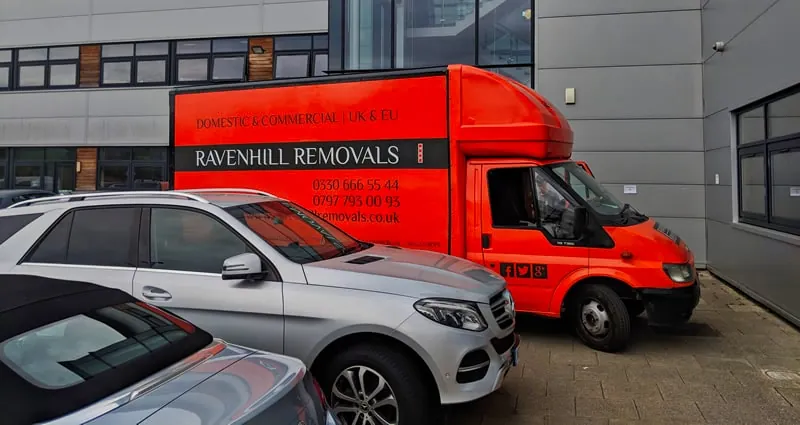
If an office closes, there may be no destination for its contents. We help establish what is being retained, transferred to another location, sold, reused or removed. For a business reducing from several floors to one, the clearance may be staged so staff can keep using the remaining accommodation until agreed dates.
Office desks, chairs, meeting tables, pedestals, screens, freestanding cupboards, whiteboards and other reusable office furniture.
Reception seating and counters, lobby furniture, break-room furniture, storage units and agreed loose items from kitchens and welfare rooms.
Monitors, printers, desktop equipment and cables can be handled under an agreed inventory. Electrical waste must be segregated for appropriate treatment.
Boxes, filing cabinets, stockroom contents and selected shelving. Sensitive records require secure arrangements; standard clearance does not include certified confidential destruction.
Some offices must be handed back as open-plan space or prepared for refurbishment. We can discuss the removal of carpet tiles and certain floor coverings, demountable non-load-bearing partitions, redundant shelving, suitable joinery and selected fixtures. The schedule of works needs to distinguish between loose-item clearance and the separate strip-out package.
Any electrical isolations, plumbing work, fire-safety changes, intrusive surveys, structural alterations or work involving suspected asbestos must be assessed and carried out by appropriately competent specialists. We do not assume that a partition can be removed just because it looks lightweight; the landlord's specification and building information come first.
Commercial lease agreements often require premises to be returned in a particular condition. If you have a dilapidations schedule, landlord's handover requirements or a measured drawing, send them with your enquiry. We can help identify the agreed clearance tasks and discuss the sequence before decorators, flooring contractors or other trades are booked.
We cannot determine contractual liability under a lease: that is a matter for the landlord, tenant and their professional advisers. Our role is to assess and carry out the works that are instructed and agreed.
Before a site is cleared, nominate a contact who can approve which items are retained. Suitable furniture might be moved to another branch, donated or assessed for resale; other materials may require recycling or commercial disposal.
Data security and waste compliance: Secure data wiping and confidential document destruction must be arranged separately if needed. Batteries, electrical equipment, hazardous chemicals, fluorescent lamps, refrigerants and other controlled streams should be declared so they can be handled by the appropriate parties with the necessary records.
If the same desks, computers and documents are moving to a new workplace, see office relocation and business removals. If the premises are being emptied entirely, this clearance service is more suitable. For shops or warehouses needing goods moved between active sites, see commercial stock transportation.
Tell us the address, approximate size, contents, access restrictions, dates and whether flooring or partitions must be removed. Large commercial sites may need a survey before we can price the work. Call 0330 666 55 44 or send details of your project.
Send the scope, postcodes and dates so we can discuss the right arrangements.