
UK–EU HOUSEHOLD RELOCATIONS
European removals & international house moves
Planning a move between Britain and Europe? Start with the route, inventory, customs paperwork and a careful delivery plan.
Relocating from the UK to Europe — or returning home to Britain — takes more planning than an ordinary house move. You have a ferry or tunnel crossing, different customs systems, an inventory of belongings, vehicle and driver requirements, and a delivery address that may be hundreds of miles from the port. Ravenhill Removals can discuss European house removals and overseas relocation transport, subject to the route, documentation, compliant transport arrangements and availability.
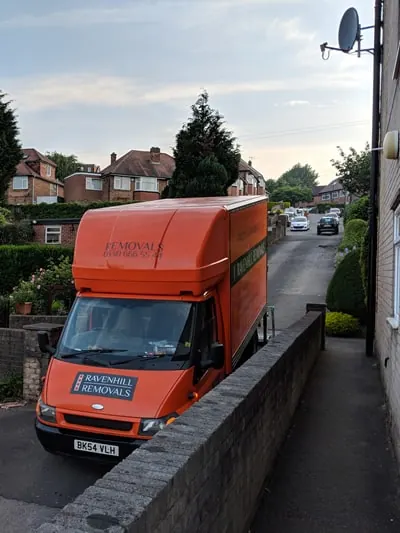
European removals: discuss your destination and the right type of service
Whether you are considering a move to France, Spain, Portugal, Germany, the Netherlands, Belgium, Italy or elsewhere in Europe, the practical requirements vary considerably. We can assess enquiries for a full family-home relocation, moving selected furniture, or returning belongings to the UK. The feasibility of a particular country, vehicle, dates and transport method must be confirmed before we agree to carry out the move.
Give us the origin and destination postcodes or full addresses, the preferred dates, a list of what is going, and photographs or a video survey. This lets us work out the approximate volume and weight, any packing or dismantling required, access at each property and whether a dedicated journey is realistic. We do not publish a one-size-fits-all price because crossings, route length, customs support and the actual load all matter.
What makes a move between Britain and Europe different?
A cross-border move needs a coordinated plan covering the collection address, safe packing and loading, a permitted transport operation, the port or tunnel crossing, relevant export and import declarations, and unloading at the destination. Ferry or tunnel bookings may change if customs or paperwork is delayed. Some properties abroad also have apartment loading restrictions, limited access for larger vans and local booking requirements.
Since the UK left the EU customs union, an ordinary move of used household belongings should not be treated as paperwork-free. Rules depend on your destination, residency status, whether the move is permanent or temporary, and the kinds of goods being transported. Check with the receiving country's customs authority before choosing a moving date. If customs agents are needed, the scope and responsibility for instructing them must be agreed in advance.
Your inventory is one of the most important documents
For an international household move we recommend a written, numbered inventory covering furniture, boxes, electrical items and anything unusual. A vague entry such as “house contents” may not be sufficient for the information requested by a customs representative. A practical list records box numbers, general contents and major standalone items, with notes on high-value or restricted goods.
- Room-by-room packing: use cartons of suitable strength; label contents and destination room consistently.
- Large furniture: record bed frames, wardrobes, sofas and dining tables, especially if they need dismantling.
- Fragile or valuable goods: identify antiques, artwork, clocks, glass, mirrors and electronics before the survey so appropriate protection can be quoted.
- Goods requiring special checks: food, plants, animal products, alcohol, tobacco, firearms, medicines, commercial stock, vehicles and some antiques may be restricted or subject to separate procedures.
- Personal documents: keep passports, keys, prescriptions, identity papers and essential records with you rather than inside the removal vehicle.
We can discuss packing and labelling, but any customs inventory, values and declarations must be accurate and approved by the person legally responsible for the goods. Do not combine personal household items with business stock without declaring the difference.
Moving from the UK to an EU country: customs and residency
If you are moving your normal home to an EU country, you may be entitled to relief on personal household effects under that country's rules. Eligibility, evidence of former residence, proof that the possessions have been used, time limits and declaration procedures vary. A passport or property purchase alone does not automatically clear your household items through customs.
Ask the relevant national customs authority or an appropriately qualified customs agent what documents are required. This may include identification, evidence of your current and future addresses, a residence permit where applicable, an inventory, proof of ownership or use of certain goods, and declarations prepared before shipment. Customs clearance, taxes, examination fees and duties must never be assumed to be included unless a written quotation states so.
Visa and residency matters are separate from the removal of your possessions. You should obtain appropriate immigration advice or consult the official government information for the country you are entering.
Moving back to the UK: Transfer of Residence (ToR) relief
For customers moving or returning to Great Britain, HMRC has a Transfer of Residence (ToR) relief process. Eligible people may be able to import household belongings free of certain customs charges. One way to seek prior approval is the ToR1 application. HMRC's current rules cover residency, ownership and use of belongings, timing and supporting documents. Eligibility is not automatic.
Apply early where required and give the approved reference to the party responsible for import declarations. HMRC explains that people moving to the UK should prepare a list of household goods and supporting evidence of their former and new addresses. See HMRC's official transfer of residence guidance for the latest conditions. Rules for Northern Ireland, vehicles, students, marriage-related moves and special categories of goods can differ.
We can discuss the transport side, but Ravenhill Removals is not an immigration adviser or customs authority and does not guarantee approval of duty relief. If customs brokerage forms part of the agreed service, the responsible agent and charges will be identified in writing.
Packing and protecting belongings for long-distance transport
On a European move the van may travel across different road surfaces, spend time at terminals and cover substantially more miles than a typical local relocation. Proper packing is therefore important. We can discuss full packing, fragile-item packing and furniture dismantling where available and suitable for the route.
We recommend double-walled cartons for heavier contents, protective wrapping for polished furniture, appropriate covers for upholstery, and careful preparation of mirrors and framed pictures. Breakable items should be cushioned and labelled clearly. Flat-pack wardrobes and bed frames may be easier and safer to transport dismantled, provided reassembly has been agreed and the fixings are kept with the item.
Specialist furniture such as pianos, grandfather clocks, fine art or very high-value antiques must be identified early, not mentioned after the van is loaded. See our antique and grandfather-clock removals guidance for the precautions we would discuss.
Dedicated removals, shared loads and the delivery timetable
A dedicated removal generally means the vehicle is allocated to your consignment and planned around your collection and delivery requirements. A part-load or shared-load service, if available through a suitable compliant transport arrangement, may be an option for smaller volumes, but it is usually less flexible because collection and delivery depend on consolidated routes.
When reviewing a quotation, ask whether the service is direct or shared, whether a transfer between vehicles is planned, the delivery window, what happens if ferry crossings are delayed and who will contact you during the journey. A quoted driving time should not be confused with a guaranteed delivery time. Borders, rest requirements, weather and traffic can all affect the schedule.
Property access abroad: the detail that catches people out
European streets and buildings can present very different access conditions: city-centre pedestrian zones, mountain approaches, restricted vehicle weights, narrow arches, old staircases, apartment lifts or long distances from the nearest safe loading space. Some town centres require permits or reserved loading windows. These are not details to leave until the removal team arrives.
Tell us the floor level, lift dimensions, stair configuration, vehicle access restrictions, local contact number and any parking authorisation needed at both addresses. If the new property is in a gated development or a historic centre, send photos of the approach as well as the rooms. Any furniture too large to enter safely needs a plan agreed in advance.
What is included in a European removals quotation?
We will prepare the quotation for the actual move rather than an unspecified “Europe package”. Depending on the agreed scope, pricing may take account of:
- Collection postcode and the destination country, region and address.
- Load volume, vehicle requirements and the route to and from the crossing.
- Number of people needed to load and unload safely.
- Packing materials, fragile packing and furniture dismantling/reassembly.
- Ferry or tunnel crossings, toll roads, fuel, travel and accommodation requirements.
- Vehicle parking or delivery restrictions and any required permits.
- Whether customs declarations or a specialist agent must be arranged separately.
- Insurance, applicable exclusions, waiting time and the treatment of delays or changes.
We will state what Ravenhill Removals is proposing to provide, what must be arranged by you or a third party, and what remains subject to confirmation. A transport enquiry does not establish that every country or journey can be served; cross-border work is subject to appropriate operator licensing, vehicle and driver documentation, route permissions and suitable insurance.
European removals: questions customers often ask
Can I take all my household furniture when moving to Europe?
Many used household possessions can be moved, but the import conditions and restrictions depend on your destination and circumstances. Check especially for goods that are new, commercial, unusually valuable or regulated; not everything qualifies for household-goods relief.
Will I have to pay customs duties or VAT?
Possibly. Some people qualify for transfer-of-residence relief, but rules and evidence differ by country. Ask the customs authority or agent before the move. We cannot guarantee an exemption.
Do I need to be present when my belongings are delivered?
We need an authorised person available to agree access and receive the delivery, unless another arrangement has been specifically documented. Check customs and identification requirements too.
Can you pack my home before the move?
We can discuss a packing service as part of your individual quotation. Let us know if you want everything packed or only fragile and high-value items.
Can you bring my belongings back from Europe to Sheffield?
We welcome return-move enquiries, subject to route and transport feasibility. Tell us where the goods are currently located, your new UK address and whether the HMRC ToR process may apply.
Request a European removals quotation
Send both complete addresses or postcodes, the destination country, your preferred moving dates, the number of bedrooms, an inventory or walkthrough video, and any access limitations. Include whether the move is permanent, whether you need packing, and whether you're already working with a customs agent.
We can then discuss the next practical steps, identify matters that need checking and determine whether a compliant service can be offered for your route. Send us your international removals enquiry or call 0330 666 55 44.
Regulatory information is provided as a starting point, not legal or customs advice. Always check the official rules for your specific route before shipping. Useful references: UK ToR1 guidance and UK international light-goods transport licensing guidance.
Planning a move to or from Europe?
Tell us the country, both addresses, dates, inventory and packing requirements so we can assess the route and next steps.